
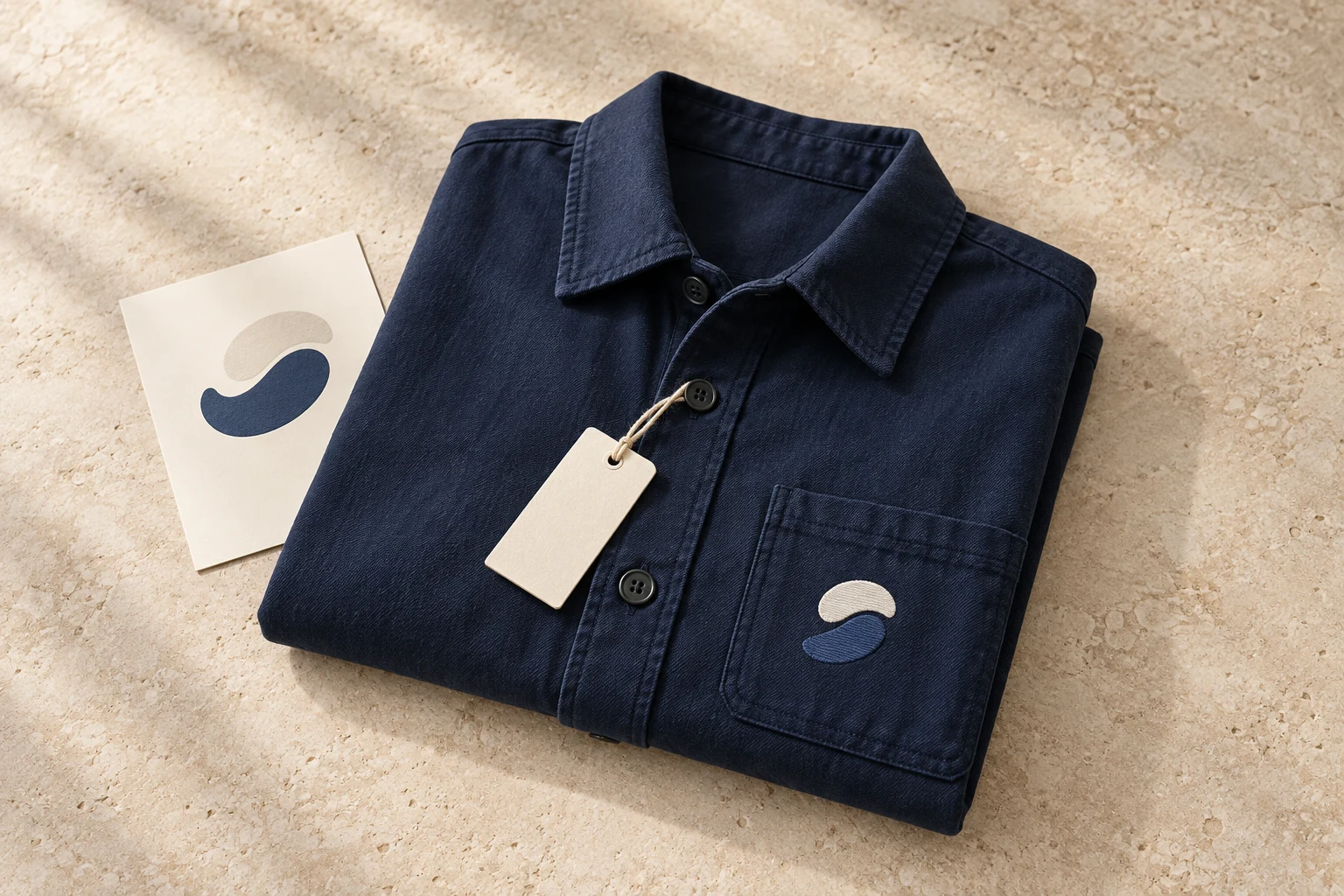
Cover image: AI-generated editorial concept; not a customer project or production proof.
White-label services let your business offer work under its own brand while a separate supplier handles agreed design or production tasks. For embroidered merchandise, that can include digitizing, vector artwork, design editing, patches and monograms. Choose the service by the deliverable you need, then confirm branding terms, approval steps and production responsibilities in writing.
A digital artwork order and a finished merchandise order involve different work. Before promising customers embroidered apparel, establish who supplies the garments, stitches the design, checks the finished pieces and arranges delivery.
Which white-label services fit your business?
A print shop may need artwork support while keeping production in-house. A promotional products distributor may need finished patches or decorated garments. An apparel brand may need several services across a collection.
Service | What to define before ordering |
|---|---|
Embroidery digitizing | Required machine file, finished design dimensions, fabric, placement and who performs the test sew-out. |
Vector artwork | Intended printing or cutting process, editable file requirements, colors and any artwork reconstruction. |
Embroidery design editing | Existing file, requested changes, new size or fabric, and whether the design needs rebuilding. |
Custom patches | Construction, dimensions, border, backing, quantity and whether attachment is included. |
Monograms and personalization | Exact letters or names, order, style, placement and quantities for each variation. |
Finished merchandise | Garment sourcing, decoration, inspection, packaging, dispatch and returns responsibilities. |
These are services to discuss with a supplier, not a statement that every provider offers the complete package.
Understand the difference between artwork and production
Embroidery digitizing and editing
Digitizing creates embroidery data from artwork. It involves decisions about how the design will be stitched, rather than simply changing an image’s filename. Wilcom describes image conversion into embroidery objects and the generation of stitches in its digitizing explanation.
Send the intended size, fabric and placement with the artwork. Fabric affects choices such as underlay, density and pull compensation; Wilcom’s fabric settings guidance explains how these settings relate to the selected material.
For an edit, supply the best available original embroidery file and describe the change precisely. Ask whether the supplier can revise that file or needs to digitize the artwork again. A change from a shirt design to a cap application should be reviewed as a production requirement, even when the logo stays the same.
DigitEMB’s embroidery digitizing services provide a starting point for discussing digital embroidery work. Confirm any reseller presentation or white-label requirements separately.
Vector artwork and conversion
Vector artwork uses paths and shapes that can scale without the pixelation associated with enlarging raster images. It is useful when a logo must appear across printed merchandise, packaging and signage. Adobe’s raster and vector image guide explains the distinction and why the final output medium still matters.
Specify what the production partner needs: an editable master, a print file, cutting artwork or color separations. Ask how fonts and linked images should be handled. A vector logo can be a source for digitizing, but embroidery still requires its own stitch preparation.
For artwork rebuilding and related print preparation, explore DigitEMB’s raster-to-vector services.
Patches, monograms and finished goods
For patches, approve the complete specification, including the edge, backing and attachment method. State whether you want loose patches or patches attached to garments. DigitEMB’s custom patch services are a relevant starting point for a patch inquiry.
For monograms and names, provide a clearly labeled list of variations. Check spelling, letter order and placement for each item before approval. Personalized orders need a reliable way to match each design to the correct garment or recipient.
If you need finished apparel, ask explicitly about garment sourcing and decoration. Buying a stitch file does not itself include a physical garment, and buying loose patches does not establish that attachment or fulfillment is included.
Where the services can be useful
The original purpose of a white-label arrangement is practical: add capabilities your business needs without having to perform every task internally.
Fashion and apparel: coordinate artwork, embroidery and patch specifications across jackets, shirts and accessories.
Corporate merchandise: prepare consistent designs for uniforms, caps, tote bags and gifting programs.
Promotional products: obtain the different artwork deliverables needed by embroidery and print partners.
Sports and team merchandise: manage approved emblems, patch designs and individual name variations.
Personalized gifts and retail: organize monograms and small product ranges with clear approval records.
Outsourcing can reduce the equipment or specialist staffing needed for the outsourced stage. It also introduces supplier coordination, sample costs and revision time. Compare the complete workflow before deciding whether it suits your business.
Agree on what “white-label” includes
The term alone does not tell you how the supplier will present files, packaging or customer communications. Ask for specific answers about the arrangement:
Can proofs and deliverables use your business name or a neutral presentation?
Will supplier branding appear in files, inserts, packaging or shipping paperwork?
Who communicates with your customer, and through which channels?
What confidentiality and portfolio-use terms apply to submitted artwork?
Which editable files are included, and what reuse or resale permissions are agreed?
Who handles revisions, production defects, replacements and returns?
Do not assume that white-label means exclusive designs, automatic ownership transfer, blind shipping or direct-to-customer fulfillment. Record the agreed scope with the order.
A practical process from brief to delivery
1. Define the final application
Start with the product and intended use. Include artwork, finished dimensions, placement, fabric or product reference, colors, quantity and required deliverables. For patches, add construction and attachment preferences. For personalization, attach the variation list.
Label dimensions in inches or millimeters. If an artwork detail must remain unchanged, identify it before preparation begins.
2. Compare equivalent quotes
Give each supplier the same brief. Ask the quote to separate artwork preparation, revisions, samples, physical production and delivery where applicable. Confirm minimum quantities and whether different names or designs count as separate jobs.
For US, Canadian and UK buyers, specify the currency as USD, CAD or GBP. For physical goods, include the destination country and postal or ZIP code, and ask which shipping and applicable import charges the quote includes. Digital delivery and parcel delivery should have separate expectations.
3. Review the proof and sample
Check the design version, dimensions, spelling, colors and placement on the proof. For embroidery, arrange a test sew-out on the intended material or a suitable equivalent before committing to the production run. Agree who performs that test and who reviews the result.
Inspect the physical result for readable lettering, acceptable coverage, aligned details and fabric distortion. For patches, also inspect the edge and attachment. A screen preview helps assess layout but cannot show every property of a finished textile product.
4. Approve a specific version
Keep the approved proof, file version and product specification together. Send consolidated revision instructions so the supplier knows which changes replace earlier requests.
Confirm separate milestones for artwork, sample review, production and dispatch. Identify the time zone and working-day calendar used for approvals. Build room for revisions into event or launch planning.
5. Retain a reorder record
Save the approved artwork, dimensions, thread references, garment or patch specification and sample photographs. Ask for a review when a reorder changes fabric, placement, size or construction.
For finished goods, confirm the packaging presentation, delivery address and process for reporting problems before dispatch.
Evaluate providers through a representative trial
Choose a trial that resembles the work you expect to reorder. Assess the clarity of the quote, accuracy of the deliverable, response to feedback and usefulness of the production information supplied.
Equipment names and polished portfolio images do not replace a suitable sample. Likewise, a low initial quote may exclude work you need. Choose based on the agreed scope and observed result rather than unsupported rankings or broad quality promises.
If environmental attributes matter to your buyers, request evidence for the specific material or product claim. Outsourcing, small batches or a particular thread choice alone should not be treated as proof that the complete product is sustainable.
Frequently asked questions
Can I order only digital files?
Yes, if that is the agreed service. Specify the embroidery or vector deliverables and identify who will handle physical production and testing.
Does white-label embroidery include shipping to my customers?
Only when the supplier agrees to provide it. Confirm packaging, sender details, tracking, customer communication and returns arrangements separately.
Can one logo be used for printing and embroidery?
The same source design can guide both. Each process needs appropriate preparation, so request the required print artwork and embroidery file as separate deliverables.
Are revisions and future size changes included?
Ask before ordering. Define the included revisions and how changes to artwork, dimensions, fabric or placement will be quoted.
Prepare your service brief
Send your artwork, intended products, dimensions, quantities, personalization details and required date. State whether you need digital files, loose patches or finished merchandise. Add your branding and customer-handoff requirements so the supplier can confirm what is available.
Browse DigitEMB’s service range and request confirmation of the specific white-label terms your business needs.
Practical details for White-Label Services for Embroidery, Vector Art and Branded Merchandise
The best next step is to translate the topic in this article into a short, specific brief. That gives everyone involved the same reference before a file, proof or finished product is prepared.
Work through these points in order and keep the answers with the artwork or production request. A short written brief makes it easier to compare a proof with the intended result, ask a useful follow-up question and avoid relying on assumptions made from a screen image alone.
The aim is not to add unnecessary steps. It is to identify the choices that change the final result before work begins. If a requirement is unknown, flag it for confirmation rather than guessing; that keeps the approval process focused on the design, material and use that apply to this particular project. Save the approved brief with the project files for future reorders or revisions.
State the intended outcome
Describe where and how the finished item will be used, who it is for and the result that matters most. This helps separate a useful requirement from a visual preference.
Collect the source material
Provide the clearest artwork, references and text available. Mark anything that cannot change, such as a logo, spelling, colour or placement requirement.
Review the final details
Before approving work, check the real size, material, format and any production constraints. Confirm the details that affect how the design will look in use, not only on a screen.
Quick questions to check before you proceed
What should I prepare first?
Start with the artwork, its intended use, finished size and any requirements that cannot change.
Why is a proof important?
A proof is the shared reference for checking details before production. It is the best time to correct a size, spelling, colour or placement issue.
What makes a useful request?
A clear request explains the goal, provides the best available source material and identifies the details that need approval.