
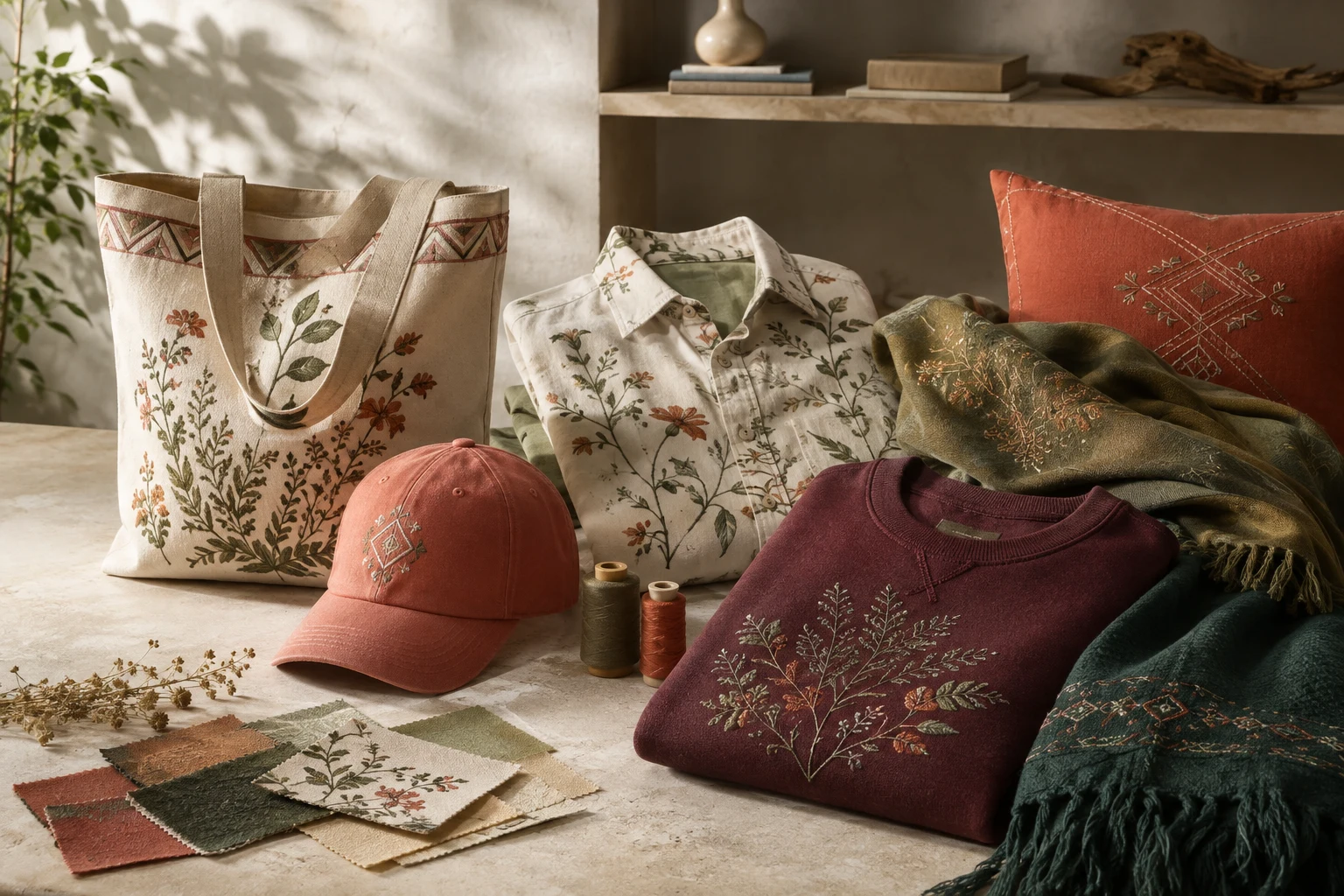
Cover image: AI-generated editorial concept; not a customer project or production proof.
Seasonal design collections are coordinated groups of products built around a particular time of year. A collection might connect clothing, bags, hats and home decor through shared colors, motifs and textures. Start with your audience’s needs, choose a clear theme, and adapt it to each product before approving samples and preparing the launch.
For buyers and small brands in the US, Canada and UK, the strongest starting point is the intended use: spring layering, summer travel, autumn home updates or winter gifting. Seasonal references can make a range feel timely while familiar design details keep it recognizable.
What belongs in a seasonal collection?
A collection needs a visual relationship between products. It does not require every item to carry the same large graphic.
Apparel: Shirts, sweatshirts, jackets and other pieces coordinated through colors, patterns or decoration.
Accessories: Bags, hats, scarves and jewelry that echo the collection’s shapes or palette.
Home decor: Cushions, throws, table linens and decorative textiles that bring the theme into a room.
Personalized products: Monogrammed gifts, embroidered accessories or patches developed within the same design direction.
For example, an original botanical theme could appear as a printed pattern on a tote, a small embroidered sprig on a shirt and a larger motif on a cushion. This is a planning example, not a customer collection.
A coordinated range also gives a brand material for product photography, lookbooks and launch messages. Treat repeat purchases and engagement as results to measure; a seasonal theme alone does not guarantee either.
Design ideas for all four seasons
Use these as creative starting points rather than claims about current trends. Adapt them to your audience, existing brand colors and product use.
Season | Possible collection direction |
|---|---|
Spring | Botanical shapes, lavender, mint and soft blue across shirts, light layers, totes and table linens. |
Summer | Coral, yellow or turquoise with coastal or geometric motifs on caps, travel bags and casual apparel. |
Autumn / fall | Olive, rust and deep red with leaf forms or plaid patterns across overshirts, scarves and cushions. |
Winter | Navy, burgundy and emerald with geometric or festive details on knit accessories, sweatshirts, throws and gifts. |
Keep regional conditions in mind. A winter assortment for a colder Canadian market may need different garments from one intended for a mild US location. Ask what customers will actually wear or use instead of assigning fabric solely by the season’s name.
For campaigns spanning the US, Canada and UK, confirm local event dates and preferred wording before putting them into artwork. Keep holiday-specific pieces within a wider seasonal range when you want products to remain relevant after an event.
Build a cohesive collection from concept to sample
Define the audience and product mix
Write a short brief describing who the collection serves, where the products will be used and what should connect them visually. Choose a manageable assortment you can sample and explain clearly.
Give each item a role. A statement jacket might carry the main motif, while a cap uses a simplified detail and a cushion repeats the palette. Avoid adding products merely to increase the number of items.
Establish a shared visual direction
Choose a small working palette, one principal motif and supporting details. Specify which elements must remain consistent and where variation is welcome.
Review the designs together at their intended sizes. An illustration that looks balanced on a cushion may need a different composition on a narrow scarf or a small bag pocket. Carry the collection’s character across formats while allowing each product to work on its own.
Select materials for the actual use
Compare physical samples for weight, texture, drape, opacity and care requirements. Ask suppliers for the exact fabric composition and construction rather than relying on a description such as “summer cotton” or “winter fleece.”
Decoration needs its own material review. Wilcom explains that fabrics respond differently to needle penetration and thread tension, and that embroidery settings such as density, pull compensation and underlay need to account for those differences. A design prepared for one fabric therefore deserves review before use on another. Wilcom’s guidance on fabric settings.
Adapt customization to each product
Decide where embroidery, patches, printing or monograms contribute to the collection. Define the finished dimensions, placement and color choices for each version before requesting production artwork.
For embroidery file preparation, see DigitEMB’s embroidery digitizing services. For a separate badge that becomes part of the product, explore custom patches. Confirm the deliverables for your order, including whether you are purchasing a digital file or a physical item.
Keep personalization choices manageable. A defined set of placements, lettering options and colors makes it easier to review combinations and present them clearly to buyers.
Approve representative samples
Request a decorated sample on the intended product before committing to a larger run. Review appearance, placement, legibility and how the decoration feels during normal use. Compare related products side by side for visual consistency.
For washable items, agree on a care test appropriate to the supplier’s instructions and inspect the result. Record the approved artwork version, product specification and any changes. A screen preview is useful for layout approval, but the physical sample is the reference for the finished product.
What to ask a design or production provider
Professional help can cover concept development, artwork adaptation, digitizing or manufacturing. Establish which responsibilities are included rather than assuming one provider manages the entire collection.
Topic | Information to confirm |
|---|---|
Scope | Whether the work includes original design, file preparation, samples, finished goods or a combination. |
Product specifications | Material, color, dimensions, sizes and decoration placement for each item. |
Deliverables | Required artwork or machine files, physical products and revision arrangements. |
Sampling | Who produces samples, who approves them and what happens if changes are needed. |
Schedule | Dates for artwork review, sample approval, production and dispatch, with time for revisions. |
Destination | Delivery location and any destination-specific arrangements for US, Canadian or UK orders. |
Work backward from the date products need to be available. Separate digital artwork delivery from physical production and shipping, and obtain a schedule for the actual order. Avoid advertising a launch date based only on an estimated file turnaround.
Present the collection clearly online
Create a collection page that explains the theme, then let individual product pages answer buying questions. Show the full item, decoration close-ups, available colors, dimensions or garment measurements, and personalization examples where relevant.
Use consistent lighting and backgrounds so shoppers can compare pieces. Include styled photographs to show how apparel and accessories work together or how home textiles relate within a room.
Some platforms support richer previews. Shopify, for example, supports product images, video and 3D models, although displaying video and 3D models requires suitable theme support. These options can supplement clear photography and specifications. Shopify’s product media documentation.
Plan a small set of useful launch content: an overview of the theme, product details and examples of coordinated combinations. Email announcements and social posts should direct shoppers to accurate product information. If working with a creator, provide the approved specifications so their descriptions match what buyers will receive.
After launch, review which products, colors and customization choices attracted orders or questions. Use those observations when planning the next season, and keep successful core products where they still serve your audience.
Frequently asked questions
Do seasonal collections have to follow fashion trends?
No. Nature, local activities, familiar seasonal colors or an established brand motif can provide the direction. Choose references that fit your audience and products.
Can one design work across clothing, accessories and home decor?
Yes, as a shared concept. Adjust its size, placement and level of detail for each application, then approve the relevant samples.
How early should collection planning begin?
Start early enough to cover design development, sourcing, sampling, revisions, production and delivery. Ask each provider for the time required for your specific order rather than relying on a universal lead time.
Should every seasonal product be a limited edition?
No. You can combine continuing core items with seasonal colors or motifs. Describe availability accurately and reserve limited-edition language for products with a defined limit.
Practical details for Seasonal Design Collections: Ideas for Apparel, Accessories and Home Decor
The best next step is to translate the topic in this article into a short, specific brief. That gives everyone involved the same reference before a file, proof or finished product is prepared.
Work through these points in order and keep the answers with the artwork or production request. A short written brief makes it easier to compare a proof with the intended result, ask a useful follow-up question and avoid relying on assumptions made from a screen image alone.
The aim is not to add unnecessary steps. It is to identify the choices that change the final result before work begins. If a requirement is unknown, flag it for confirmation rather than guessing; that keeps the approval process focused on the design, material and use that apply to this particular project. Save the approved brief with the project files for future reorders or revisions.
State the intended outcome
Describe where and how the finished item will be used, who it is for and the result that matters most. This helps separate a useful requirement from a visual preference.
Collect the source material
Provide the clearest artwork, references and text available. Mark anything that cannot change, such as a logo, spelling, colour or placement requirement.
Review the final details
Before approving work, check the real size, material, format and any production constraints. Confirm the details that affect how the design will look in use, not only on a screen.
Quick questions to check before you proceed
What should I prepare first?
Start with the artwork, its intended use, finished size and any requirements that cannot change.
Why is a proof important?
A proof is the shared reference for checking details before production. It is the best time to correct a size, spelling, colour or placement issue.
What makes a useful request?
A clear request explains the goal, provides the best available source material and identifies the details that need approval.