Start with remembrance and a specific context
An illustrative brief might describe a textile piece for a family gathering, guided by the family members who would use it. They could explain whether a paired composition feels appropriate, whose memory it should hold, and whether any wording belongs beside it. Those choices would give the design a personal purpose beyond the appeal of its ornament.
UNESCO describes Día de Muertos as practiced by Indigenous communities in Mexico as commemorating deceased relatives and loved ones' temporary return. The Smithsonian also explains that Día de Muertos and Halloween are distinct holidays. That context matters here: a skull motif should not automatically turn a remembrance brief into a Halloween theme. The sources inform this discussion; they do not endorse this artwork.
Read the pair as a composition
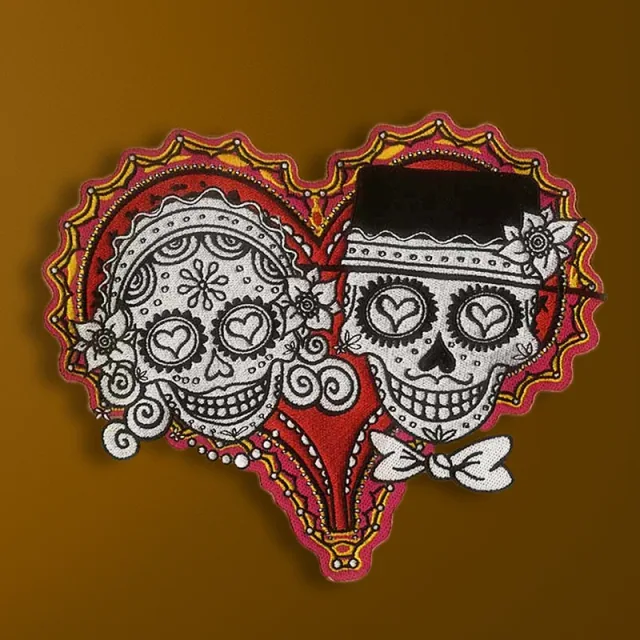
The displayed design brings two white skulls together within a red heart. Heart shapes sit inside the dark eye outlines, while flowers, curls and small dots carry detail across the faces. A black hat and white bow tie create a strong contrast on the right. A layered yellow, red and dark border encloses the whole shape.
For a new concept, these details could prompt a discussion about closeness and balance. The image does not tell us who the pair represents or what the original designer intended. A commissioner could keep the paired arrangement, request another composition, or omit symbols that feel unsuitable. Color and ornament should follow that person's intended meaning rather than an assumed universal interpretation.
Let the intended participants guide the brief
If the piece is intended for a particular observance, involve the people responsible for that gathering before choosing motifs or labels. Ask about the words they use, the references they want included and the elements they want left out. A general design story cannot stand in for their decisions or speak for every family or community.
For embroidery planning, provide the intended dimensions, textile and placement, then discuss how the eye details, curls and border could remain readable. Request a proof and discuss a sample with the embroiderer before committing to production. Any proposed names or dedication should be checked by the person commissioning the piece. The final brief should make both the visual intention and its particular context clear.
The digitizing service supplies a digital embroidery file. The garment and stitching need to be arranged separately, with the intended fabric and size shared before the file is prepared.