Give the gathering a recognizable feeling
Imagine an independent music night looking for artwork that would feel familiar to the people who return each month. The brief could begin with a question about the room: is its defining feeling intimacy, movement, shared singing or quiet attention? An answer would give the illustrator a direction before the conversation turns to a logo or a list of colors.
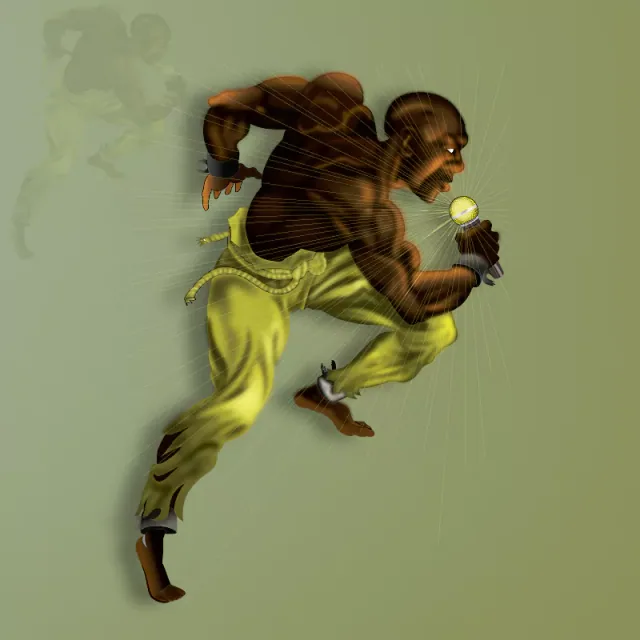
This particular image suggests movement and intensity. For an event with that character, a new illustration could become a recurring visual cue on a poster or shirt. The organizers would supply the actual identity, audience and story. Nothing in the portfolio image establishes a musical genre, a local scene or the identity of the performer.
Build around the gesture
The figure leans forward into a handheld microphone, with one arm drawn back and the legs spread across a diagonal. Bright yellow-green trousers stand out against the muted background, while fine lines radiate around the microphone. A faint repeated figure in the upper corner adds another layer. The result offers several visual ideas to discuss without needing to invent a biography.
For a new concert poster, the diagonal pose could guide the eye toward the event title. A shirt composition might call for a simpler background and a more compact silhouette. Those would be proposed adaptations, not demonstrated versions of this artwork. Comparing a large layout with a small thumbnail would help the organizers decide which gestures deserve the most emphasis.
Plan the artwork around its actual uses
A useful brief would list the first applications: perhaps a venue poster, a social graphic and one merchandise placement. Include their dimensions and the printer's requirements before choosing a file format or treatment for the shaded areas. The displayed portfolio preview cannot confirm the contents of a source vector file or its suitability for a particular printing process.
Supply references the project is authorized to use, along with any approved performer photographs, names and logos. Decide who will review the likeness if a real person is included. Keep event details editable in the proposed layout, and check dates and venue wording separately from the illustration. That leaves the artwork free to express the gathering while the information helps people find it.
If you need a new illustration or creative changes, confirm that scope separately from converting existing artwork. The reference here helps explain an idea; it is not a promise that new illustration is included in a conversion quote.