Find the detail that belongs to the place
Imagine a family planning an open day and wanting an illustration that feels connected to their own land. The first conversation could cover the details visitors actually know: a particular tractor, a distinctive barn or an animal with a memorable personality. A mascot could grow from those references instead of relying on a generic picture of country life.
The displayed artwork suggests a humorous direction, but that would be a choice for the family. Some might want a lively character for a children's activity sheet. Others might prefer a quieter drawing for a sign. The brief could name the audience and the mood first, leaving room for the illustrator to propose a character that fits.
Choose which part of the joke to keep
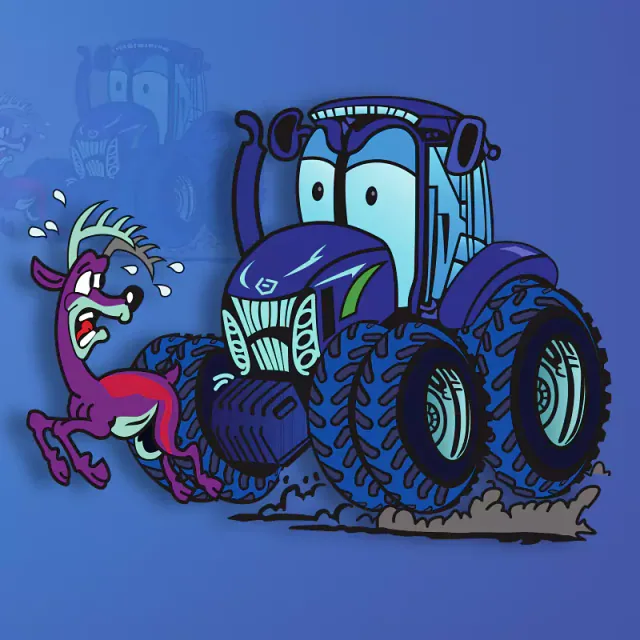
In this image, the tractor's large eyes and heavy tires dominate the composition. A purple horse appears beside it with an open mouth, raised legs and small marks around its head. Dark outlines, bright highlights and a low sweep of dust create a busy cartoon scene. These are visible design choices; the image does not establish an actual event or relationship between the characters.
For a new family farm illustration, the commission could focus on the tractor's expression while changing the surrounding action. If the horse's startled appearance does not suit the intended tone, a different pose could be requested. Choosing that relationship deliberately would help the artwork feel welcoming to its audience. The original preview is inspiration for this discussion, not a promised editable mascot kit.
Make the character useful beyond one page
A farm event brief could identify a main poster and a simpler activity-sheet version as separate proposed applications. The family would provide the correct name, any relevant photographs and the details they are comfortable making public. A private family joke may need explanation for visitors; a clear gesture or familiar object could carry the idea more naturally.
Before requesting tractor vector art for a sign, shirt or printed handout, share the dimensions and the supplier's file requirements. Discuss whether the shaded background, small tire marks and fine outlines belong in every version. The preview cannot confirm how those details are constructed in the source artwork. Review the character's expression and any lettering at the intended viewing size before approving the final composition.
If you need a new illustration or creative changes, confirm that scope separately from converting existing artwork. The reference here helps explain an idea; it is not a promise that new illustration is included in a conversion quote.