
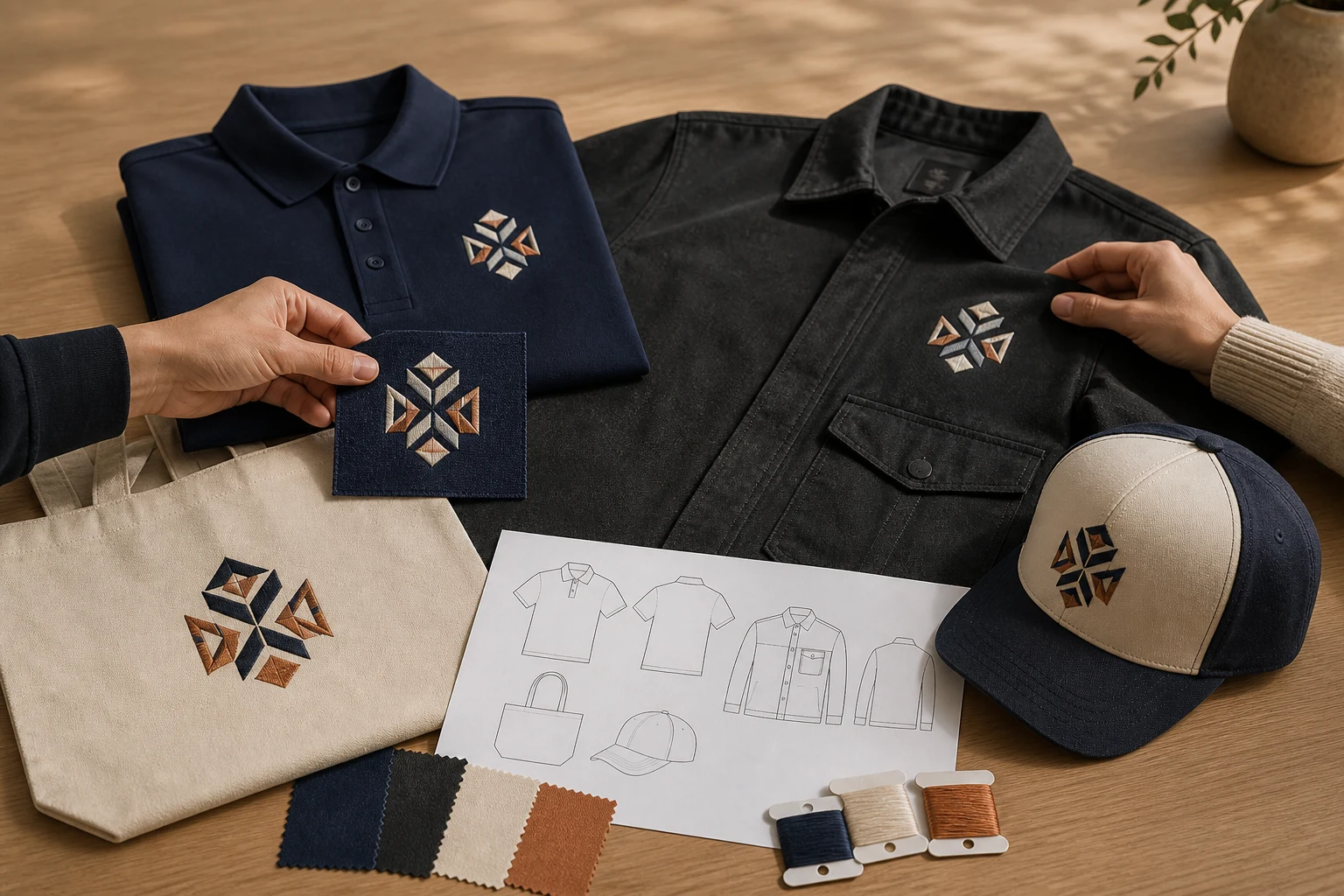
Cover image: AI-generated editorial concept; not a customer project or production proof.
Custom embroidery consulting helps a business turn its branding goals into a practical plan for embroidered uniforms, accessories and merchandise. It brings together design choices, garment suitability, thread colors, budgets and sample approval before production begins. The scope should be agreed in writing: advice, artwork development, digitizing and garment production may be separate services.
For buyers in the US, Canada and the UK, the most useful outcome is a repeatable specification that the people preparing artwork and stitching garments can follow.
What an embroidery consultant can help you decide
A consultation should start with how the items will be used. Staff uniforms, retail merchandise and event giveaways have different priorities, even when they carry the same logo.
For hospitality uniforms, discuss appearance, comfort and the intended cleaning routine. For retail merchandise, consider how the decoration fits the product’s style. For promotional items, establish the quantity, distribution date and budget before developing multiple design options.
Ask a prospective consultant to define the deliverables. These might include an artwork brief, approved logo variations, garment recommendations, a placement specification and a sampling plan. Production supervision and ongoing support should be included explicitly if you need them.
The practical benefits are clearer decisions, easier comparison of supplier proposals and a record for future orders. Consulting does not guarantee higher sales, customer loyalty or savings.
Translate your brand into a usable embroidery design
Start by identifying what must remain recognizable: the symbol, wording, proportions and color relationships. Then agree which details may be simplified if the intended embroidery size requires it.
Request artwork shown at its intended physical size, alongside a garment placement mockup. These help you judge whether the proposed decoration suits the item before paying for further development.
Consistency can mean using an approved family of designs. A cap, a polo shirt and a jacket back may need different versions of the same identity. Record those variations so future suppliers do not have to interpret them from photographs.
Make color approval specific
Provide your brand color references, then ask to review physical thread samples against the chosen garment. Madeira cautions that colors displayed on a monitor or printed on paper may differ from actual thread colors. Record the selected thread manufacturer, range and color numbers in the approved specification. Madeira’s thread resources
Choose garments, materials and techniques together
Fabric selection affects embroidery planning. Wilcom explains that fabrics respond differently to needle penetration and thread tension; stitch density, underlay and pull compensation may need adjustment for the material. A design prepared for one garment therefore needs review before use on another. Wilcom’s guide to fabric settings
Bring the actual garment specification to the discussion, including its construction, composition, intended placement and care instructions. Ask the embroiderer to assess access around seams, pockets and linings before confirming the design position.
Stabilizer selection also belongs in this conversation. Madeira advises choosing backing to suit the embroidery and fabric, with attention to weight, use and washing requirements. Madeira’s backing guidance
Consider flat embroidery, raised 3D puff and appliqué as possible design directions. Ask for relevant samples and an explanation of why the proposed method suits your artwork and garment. The consultation should connect the desired appearance to a production method the embroiderer can deliver.
A practical business embroidery planning process
1. Prepare a clear brief
Gather the information below before requesting proposals. Missing details can make apparently similar quotes difficult to compare.
Brief item | Information to provide |
|---|---|
Purpose and audience | Staff uniforms, retail products, gifts or event merchandise |
Artwork | Best available logo file, brand references and permitted changes |
Garments | Product reference, fabric details, colors and size range |
Decoration | Placement, intended width and height, and preferred appearance |
Quantity | Initial order and likely repeat requirements |
Budget | Spending limit and what it needs to cover |
Schedule | Sample approval date and required arrival date |
Responsibilities | Who approves artwork, arranges samples and manages production |
For teams working across the US, Canada and the UK, label measurements explicitly in inches or millimeters. Specify USD, CAD or GBP for quotes, and include the time zone when setting an approval deadline.
2. Agree the design and service scope
Review the artwork variations, garment choices and placement mockups together. Name one person who can approve changes on behalf of the business.
Clarify who creates the stitch file and who produces the finished items. DigitEMB’s embroidery digitizing service is a relevant starting point for preparing artwork for machine embroidery. Confirm the requested deliverables directly; a digitizing order should not be assumed to include consulting, garment sourcing or production management.
3. Compare complete quotes
Ask suppliers to separate consulting, artwork changes, digitizing, samples, garments, embroidery, packing and shipping where applicable. Establish what revisions are included and how additional garment types or design sizes will be handled.
For physical orders crossing borders, ask the supplier to identify any excluded shipping, tax or import charges. Keep digital file delivery dates separate from finished garment arrival dates.
If the proposal exceeds your budget, discuss fewer placement locations, fewer garment variations or a simpler approved design. Request a revised quote before accepting the change.
4. Review a physical sample
Ask for a stitched sample on the intended garment, or agree how closely a substitute must match it. Review lettering, color, placement, outlines, fabric appearance and the feel of the reverse side.
A software preview helps communicate the design, but it cannot show how a finished garment feels. Wilcom describes its Stitch Player as an on-screen simulation of the stitchout. Use that preview as one review tool and make physical sample approval a separate step. Wilcom’s Stitch Player documentation
For frequently washed uniforms, consider a sample wash following the garment’s care instructions before approving the full order. Record requested changes and identify the final approved sample clearly.
5. Document production and reorders
Create a handover record containing the approved artwork version, embroidery dimensions, placement reference, garment details, thread references and sample approval date. Ask the production supplier to confirm the machine file format it needs.
Agree who checks the production order, which features are assessed and how discrepancies will be reported. Keep the approved sample available as a reference.
For reorders, confirm whether the garment, thread or production setup has changed. Ask whether a fresh sample is needed, and establish who retains the design files and whether future edits are included.
Choosing the right consulting support
Look for someone who can explain tradeoffs using relevant samples and turn your preferences into written instructions. Ask how they coordinate with the digitizer and embroiderer, what happens when a sample needs revision, and whether support continues after approval.
A straightforward repeat order with an established specification may need only supplier coordination. A new uniform range or merchandise collection with several materials and placements may justify more detailed consulting.
Frequently asked questions
Is embroidery consulting the same as digitizing?
Consulting covers project decisions and coordination. Digitizing prepares the embroidery design for machine stitching. One provider may offer both, but confirm each deliverable in the quote.
Can the same logo be used on every item?
The same brand identity can carry across the range. Ask the digitizer to review each size, placement and fabric combination rather than assuming one stitch file will suit all products.
What should I bring to the first consultation?
Bring your best available artwork, brand references, garment details, intended quantities, budget and required date. Include examples of the appearance you want and identify who will approve the work.
Does consulting include finished embroidered garments?
Only when the agreed scope says so. Confirm responsibility for sourcing garments, stitching samples, production checks and shipping before placing the order.